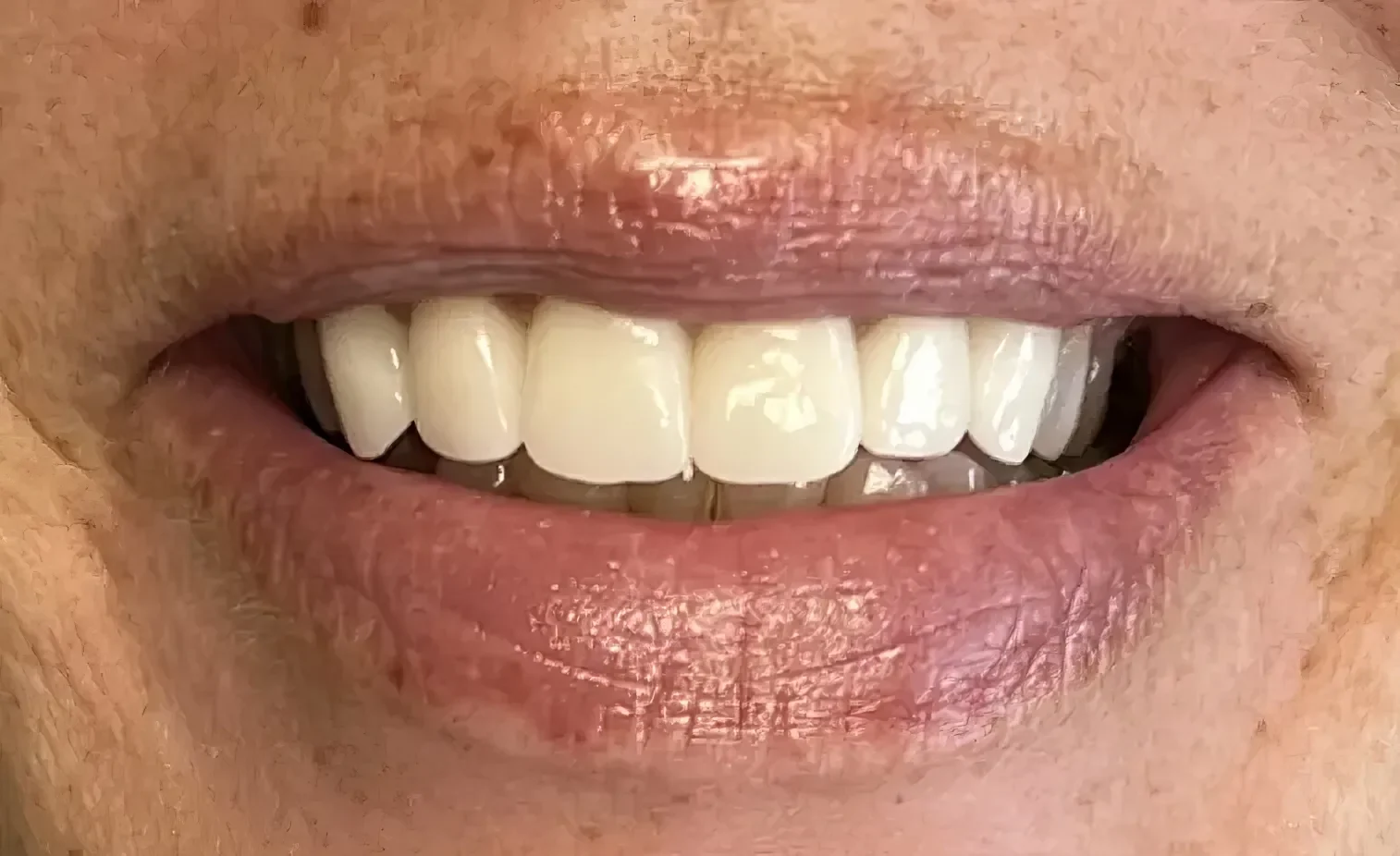
The short answer: The main types of dental crowns are all-ceramic (porcelain), zirconia, E.max, gold, and porcelain-fused-to-metal. Cost depends on the material, any work the tooth needs first, and your insurance, with 2024 national averages of about $1,100 to $1,400 per crown. With good care, most crowns last 5 to 15 years, and many last longer.
If your dentist has said you need a crown, you probably have three questions right away: what kind, how much, and how long will it last? The answers are connected. Each crown material suits a different tooth, a different bite, and a different budget, so the type you choose shapes both the cost and the result.
In this guide, we compare the main crown materials in plain language, explain what actually drives the price, and share the habits that help a crown last. At Smile Design Modern Dentistry in Durham, general dentist Dr. Erfan Imeni will help you choose the crown that suits your tooth, your bite, and your budget.
What Is a Dental Crown?
A dental crown is a custom-made cap that covers a damaged or weakened tooth to restore its strength, shape, and appearance. You may hear it called a tooth cap, but a cap and a crown are the same thing. Because the crown takes the force of your bite, it protects what's left of the natural tooth underneath.
You might need a crown if you have:
- A large filling with little natural tooth left to support it
- A cracked, broken, or badly worn tooth
- A tooth that has had root canal treatment
- A dental bridge that needs support on either side
- A dental implant that needs a tooth on top
- A discolored or misshapen tooth you'd like to improve
A common warning sign is a filling that keeps breaking, or a sharp twinge when you bite down and release. That can mean a crack that a filling can't hold together. When the damage is smaller, a dental filling may be enough. The ADA's MouthHealthy guide to crowns notes that a crown can strengthen a tooth with a large filling when there isn't enough tooth left to hold the filling.
What Are the Main Types of Dental Crowns?
The main types of dental crowns are all-ceramic or porcelain, zirconia, E.max (lithium disilicate), gold and other metals, and porcelain-fused-to-metal. The best choice depends on where the tooth sits, how hard you bite, and how natural it needs to look.

Porcelain and All-Ceramic Crowns
Best for: front teeth and anywhere looks matter most.
All-ceramic crowns reflect light much like natural enamel, so they blend in with the teeth beside them. They contain no metal, which means no dark line can show at the gum line if your gums recede over time. Cleveland Clinic also notes that they're a good choice if you have a metal allergy.
Zirconia Crowns
Best for: molars, heavy chewing, and people who grind their teeth.
Zirconia is much stronger than traditional porcelain and copes well with heavy chewing and grinding. Modern layered zirconia also looks far more natural than older, opaque versions, so it can now be used further forward in the mouth.
E.max (Lithium Disilicate) Crowns
Best for: premolars and a single front tooth that has to match its neighbor.
E.max is a glass-ceramic that sits between porcelain and zirconia. It's noticeably stronger than traditional porcelain while keeping most of its natural translucency.
Gold and Other Metal Crowns
Best for: back teeth, where strength matters more than color.
Gold and other metal alloys are gentle on the opposing teeth and can be made very thin, so less of your natural tooth needs to be removed. Because they aren't tooth-colored, they're usually used on molars that don't show when you smile.
Porcelain-Fused-to-Metal (PFM) Crowns
Best for: front or back teeth when you want metal strength under a tooth-colored surface.
PFM crowns have a metal base covered with porcelain. They can restore front or back teeth, but because there's metal underneath, a darker edge can show at the gum line if your gums recede.
Same-Day CEREC Crowns
Best for: people who want their crown finished in one visit.
A same-day crown isn't a separate material. It's a ceramic crown designed and milled right in our office while you wait. Using CEREC digital scanning and an in-office milling unit, there's no goopy impression, no temporary crown, and no second appointment. Learn more about same-day crowns in Durham.
Not every tooth is best suited to a same-day crown. A front tooth that must match a very distinctive neighbor may benefit from a lab crown that a ceramist hand-layers over several stages. Dr. Imeni will tell you which option fits your tooth. Here's how the two routes compare at Smile Design:
| Lab crown | Same-day crown | |
|---|---|---|
| Visits | Two, usually a couple of weeks apart | One |
| Temporary crown | Yes, worn between visits | No |
| Impression | Impression or digital scan | Digital scan |
| Where it's made | A dental laboratory | Milled in our office while you wait |
| Often a good fit for | A front tooth that must match a distinctive neighbor, or several crowns planned together | Most single crowns, including a tooth that just had a root canal |
Dental plans generally treat a crown the same way however it's made. Your exam decides which route suits your tooth.
How Much Does a Dental Crown Cost?
There's no single price for a crown, because no two teeth need exactly the same work. Nationally, a 2024 cost study published in CareCredit's dental crown cost guide put the average at $1,399 for a porcelain crown, $1,211 for a metal crown, and $1,114 for a porcelain-and-metal crown. The same study listed $1,195 as the average for a porcelain crown in North Carolina.
Those are survey averages, not Smile Design's fees. Your own cost depends on:
- The material. Ceramic, zirconia, E.max, gold, and PFM crowns all have different material and lab costs.
- Work needed first. Some teeth need a root canal or a core build-up before the crown can be placed.
- Your insurance plan. Coverage levels, deductibles, and annual maximums vary a lot from plan to plan.
At Smile Design, you get a written estimate before treatment begins, so you know the cost for your tooth up front.
Does Dental Insurance Cover Crowns?
Often, yes, at least in part. Because a crown restores a damaged tooth rather than changing a healthy one for looks, many dental plans pay a share of the cost. How much depends on your plan's coverage for crowns, your deductible, and how much of your annual maximum you've already used. A crown placed only to change how a tooth looks may not be covered.
Smile Design is in network with many dental insurance plans, including Delta Dental, MetLife, Aetna, Cigna, Guardian, Blue Cross Blue Shield, and UnitedHealthcare. We check your benefits with you and put your expected out-of-pocket cost in writing before you commit. If you'd like to spread the balance out, financing is available through Cherry and CareCredit. Our patient information page lists the plans we work with and every payment option.
Why Can Waiting Cost More?
It's tempting to put off a crown, especially if the tooth doesn't hurt. But a cracked or weakened tooth can break further. A tooth that could have been saved with a crown may later need a root canal, or even an extraction and an implant or bridge. Treating it sooner is usually simpler and less expensive.
Need a crown, or not sure which material suits your tooth? See how dental crowns work at Smile Design.
How Long Do Dental Crowns Last?
Most dental crowns last 5 to 15 years, according to Cleveland Clinic, and a well-made crown on a well-cared-for tooth often lasts longer. How you care for it matters more than the material it's made from.
The most common reasons crowns fail early are:
- Decay at the edge where the crown meets the tooth
- Grinding or clenching, especially at night
- Using your teeth as tools, like opening packages or bottles
To help your crown last:
- Brush twice a day, and floss carefully around the crown's edge
- Keep up with your regular cleanings and exams
- Ask about a night guard if you grind your teeth
- Avoid chewing ice, hard candy, and pens
If a crown chips, feels loose, or comes off, call us and keep the crown if you have it. If the tooth underneath is sound, the crown can often be remade. For a natural tooth that breaks, our guide on how to fix a chipped tooth walks through the options.
What Happens When You Get a Crown?
A lab crown takes two visits and a same-day crown takes one, and the tooth is numbed either way.
For a traditional lab crown, Dr. Imeni numbs the tooth, removes any decay or failing filling material, and shapes the tooth so the crown has room to fit. Then an impression or digital scan is taken, and you wear a temporary crown until the second visit, usually a couple of weeks later. At that visit, your permanent crown is checked for fit, shade, and bite, then bonded or cemented in place.
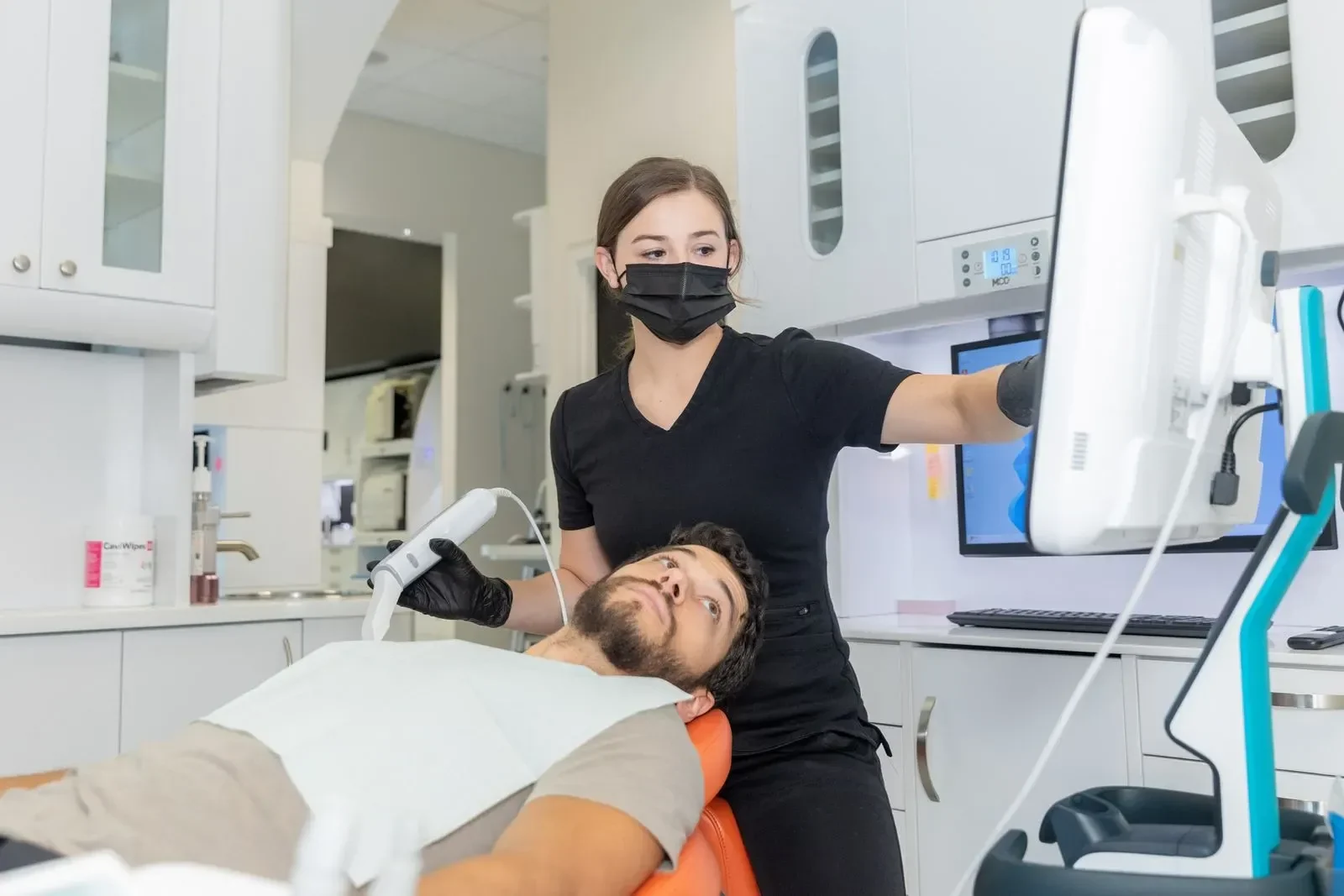
With a same-day crown, all of this happens in one appointment. The prepared tooth is scanned, Dr. Imeni designs the crown on screen, and the milling unit shapes it from a solid ceramic block while you wait. The appointment runs longer than a routine filling because the design and milling happen while you're there.

Does Getting a Crown Hurt?
Most people feel only pressure and vibration, because the tooth is fully numbed before it's shaped. Mild sensitivity to cold for a few days afterward is normal.
Nervous about dental work? We offer nitrous oxide and oral sedation, and our treatment rooms have massage chairs and Netflix-enabled Apple TVs to help you relax.
Should You Whiten Your Teeth Before Getting a Crown?
Yes, if you want brighter teeth. Crowns don't respond to whitening gel, so it's best to finish whitening first and then have your crown matched to your new, brighter shade.
How Do You Get Started With a Crown at Smile Design?
Start with an exam, so Dr. Imeni can check the tooth, your bite, and the teeth around it before recommending a material. Whether you need a single crown or you're planning a bigger restoration, the right crown starts with an honest conversation about your tooth, your bite, and your budget.
Dr. Imeni has placed hundreds of crowns as part of restorative and cosmetic treatment for patients across Durham, Chapel Hill, Raleigh, and Research Triangle Park. Our office is at 5318 NC-55, Suite 101, Durham, NC 27713, and we're open Tuesday through Friday from 7:00 AM to 3:00 PM. Call (919) 220-5505 or request an appointment online.
Frequently Asked Questions
What is the best type of dental crown?
It depends on the tooth. All-ceramic and E.max crowns are often chosen for front teeth because they look the most natural. Zirconia is a strong choice for molars and for people who grind. Gold is very durable and gentle on opposing teeth, but it isn't tooth-colored.
How much does a dental crown cost with insurance?
Your share depends on your plan's coverage for crowns, your deductible, and how much of your annual maximum is left. Many plans pay part of the cost when a crown restores a damaged tooth. At Smile Design, we check your benefits and give you a written estimate before treatment begins.
How long does a dental crown last?
Most crowns last 5 to 15 years, according to Cleveland Clinic, and many last longer with good care. Flossing around the crown's edge, regular checkups, and a night guard if you grind all help it last.
Can I get a crown in one visit?
Yes. Smile Design offers same-day CEREC crowns, designed and milled in our office while you wait. Not every tooth is best suited to a same-day crown, so Dr. Imeni will tell you which option fits yours.
Is a tooth cap the same as a crown?
Yes. "Cap" is simply an everyday word for a dental crown. Both mean a custom restoration that covers the whole tooth to protect it and restore its shape.
Do I need a crown or a filling?
A filling repairs a smaller area and relies on the healthy tooth around it for strength. A crown covers the whole tooth and takes the biting force itself, so it's recommended when there isn't enough sound tooth left to hold a filling, or after root canal treatment.
What kind of crown is best for a front tooth?
Usually an all-ceramic or E.max crown, because both reflect light much like natural enamel. If the tooth has to match a very distinctive neighbor, a lab crown hand-layered by a ceramist may give the closest match.
What should I do if my crown breaks or falls off?
Keep the crown or any broken piece if you have it, avoid chewing on that side, and call (919) 220-5505. If the tooth underneath is sound, the crown can often be remade, and sometimes that can be done in a single visit.