
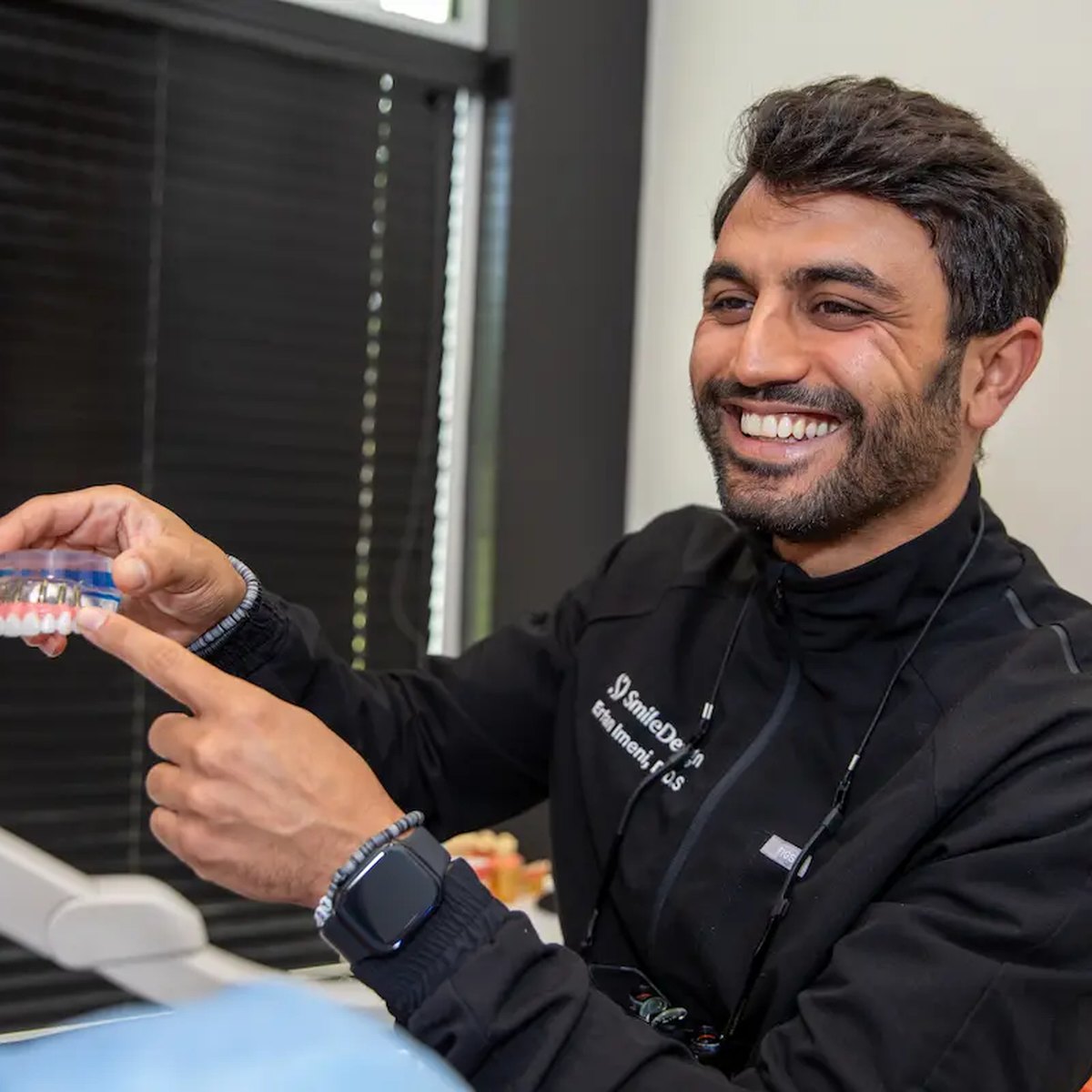
Dental bonding is the quiet workhorse of cosmetic dentistry. It fixes the chip, closes the gap or covers the stain that has been bothering you for years — usually in a single visit, usually without touching the healthy enamel underneath, and for considerably less than the alternatives.
It is also widely misunderstood. Patients arrive at our Durham office convinced they need veneers for a problem bonding would solve in forty minutes, and occasionally the reverse. This guide covers what bonding genuinely does well, where it falls short, what drives the cost, and how long it actually lasts — so you arrive at your consultation knowing which conversation you want to have.
What Is Dental Bonding?
Dental bonding is a procedure where a tooth-colored composite resin is applied directly to a tooth, sculpted into shape by hand, hardened with a high-intensity curing light, then fine-tuned and polished so it blends with the teeth around it.
The word "bonding" describes how it works: the resin chemically bonds to the tooth surface, so it stays put without crowns, caps or lab work. Everything happens chairside in one appointment — that is how we run dental bonding in Durham, NC. You may also see it called composite bonding, teeth bonding, tooth bonding or cosmetic bonding — they are all the same treatment.
What makes it distinctive is what it does not involve. According to the Cleveland Clinic, dental bonding typically does not require enamel removal. Your natural tooth stays intact underneath, which is why bonding is described as reversible in a way that veneers and crowns are not.
What Does Dental Bonding Fix?
Bonding handles a specific and very common set of problems:
- Chipped teeth. The single most frequent reason people ask about it — a corner off a front tooth from a fall, a bottle cap or a hard olive stone.
- Minor cracks. Surface cracks that are cosmetic rather than structural.
- Gaps and spaces. Closing or narrowing a gap between the front teeth without orthodontics.
- Discoloration. Stains that whitening cannot shift, including single dark teeth and white spots.
- Short or uneven teeth. Adding length to a tooth that sits out of proportion with its neighbors.
- Exposed root surfaces where the gum has receded, which is as much about comfort as appearance.
Notice the common thread: bonding adds material to a tooth that is fundamentally healthy. That is also where its limit sits — see below.
What Dental Bonding Cannot Fix
Being straight about this saves you a wasted appointment:
- Heavily damaged or structurally weak teeth. If a large portion of the tooth is gone or it has had a root canal, a crown carries the load; bonding will not.
- A full smile makeover across many teeth. Bonding excels tooth by tooth. Redesigning an entire smile is usually a veneer conversation.
- Significant crowding or bite problems. Bonding can camouflage mild misalignment. It cannot move teeth, and disguising a bite problem does not solve it.
- Severe, deep discoloration across every tooth. Bonding every visible tooth is rarely the most durable answer.
If you are somewhere between the two, that is precisely what a consultation is for. Dr. Erfan Imeni will assess the tooth and tell you honestly which treatment carries the result better.
How Much Does Dental Bonding Cost?
Bonding is one of the least expensive cosmetic dental procedures available — the Cleveland Clinic describes it exactly that way, and it is cheaper than both veneers and crowns because there is no laboratory work and no second appointment.
For a sense of scale using our own published figures: nationally, composite veneers typically cost about $400 to $1,500 per tooth and porcelain veneers about $900 to $2,500 per tooth. Bonding a single chip sits well below those, because it uses the same composite material over a much smaller area and is completed chairside.
What actually moves the number for your case:
- How many teeth are being treated
- How much of each tooth is being rebuilt — a small chip versus reshaping a whole edge
- Whether shade matching is straightforward or needs layering of several resin shades to look natural
- Whether the tooth needs treatment first, such as a filling or a cleaning
We give you the exact figure for your teeth at the consultation, before anything starts, rather than a range you have to guess your way into.
Does Insurance Cover Dental Bonding?
It depends on why the bonding is being done. Bonding carried out purely to improve appearance is generally treated as cosmetic and is not usually covered. Bonding used to restore a tooth that is chipped, cracked or decayed is more often treated as a restorative procedure, and plans are more likely to contribute.
Plans differ enormously on where they draw that line, so bring your plan details to your appointment and our team will help you work out what applies before you commit.
How Long Does Dental Bonding Last?
The Cleveland Clinic puts the working lifespan of bonding material at three to ten years before it needs touching up or replacing. That is a wide range, and where you land inside it is largely down to three things: which tooth was treated, how much material was placed, and your habits.
Bonding on a lower front tooth that takes the brunt of your bite wears faster than bonding on a tooth that mostly sits out of the way. A small chip repair typically outlasts a large rebuild. And nail-biters and ice-chewers reach the short end of that range considerably sooner than everyone else.
The good news is that failure is undramatic. Bonding chips or dulls rather than causing damage, and it is repaired by adding or replacing material — not by starting over with a bigger treatment.
How Do You Make Bonding Last Longer?
Caring for bonded teeth is straightforward, and the advice from our team is short:
- Avoid nail-biting and chewing on hard objects. This is the single biggest factor. Pens, ice and using your teeth to open things are what bring people back early.
- Keep up proper oral hygiene. Brushing and flossing maintain the appearance as well as the health of the tooth.
- Go easy on the deep stainers — coffee, red wine, tea and tobacco — especially in the first 48 hours after placement, when the resin is at its most absorbent.
- Wear a night guard if you grind. Grinding will wear bonding down faster than anything else on this list.
Does Dental Bonding Stain?
Yes, more than porcelain does. The Cleveland Clinic notes that while bonding material is somewhat stain-resistant, it does not resist stains as well as porcelain restorations.
There is a second point worth knowing, and it catches people out: composite resin does not respond to teeth whitening. Whitening gel lightens natural enamel but leaves bonding exactly as it is — so if you whiten after bonding, the bonded tooth can end up looking darker than everything around it. The fix is sequencing: whiten first, settle on your shade, then have the bonding matched to it.
Dental Bonding vs Veneers: Which Should You Choose?
This is the comparison that decides most cases, and it comes down to scope and lifespan rather than one being better.
Bonding is the better choice when: you are fixing one or two specific problems, you want it done in a single visit, you would rather not have healthy enamel removed, cost is a real consideration, or you want something reversible.
Veneers are the better choice when: you are reshaping several teeth at once, you want maximum stain resistance and longevity, or the change you want is bigger than adding material can achieve. Porcelain veneers are a lab-made shell, usually require some enamel preparation, and last longer.
A practical way to think about it: bonding repairs, veneers redesign. If you are still weighing it up, our comparison of composite vs porcelain veneers covers the material side, and our dental veneers page explains how we plan veneer cases in Durham.
Is Bonding Worth It for a Chipped Tooth?
For a straightforward chip on a healthy tooth, bonding is usually the most sensible option available. It is the fastest, the least invasive, the least expensive, and it keeps every option open — if you decide on a veneer or crown in five years, nothing about having had bonding first has cost you.
The one case where it is not the answer is when the chip is a symptom rather than the problem: a tooth that chipped because it is cracked, weakened by a large old filling or under strain from grinding. Bonding the visible damage there leaves the underlying cause in place. Our guide on how to fix a chipped tooth walks through the options in more detail.
Does Dental Bonding Hurt?
Generally not. Because bonding typically does not involve removing enamel or working near the nerve, most bonding appointments need no anesthetic at all. If the tooth is sensitive, or decay has to be cleared first, numbing is available — say so and it is handled.
Mild sensitivity to hot and cold for a day or two afterwards is normal and settles on its own.
What Happens at a Bonding Appointment?
The whole process runs in one visit:
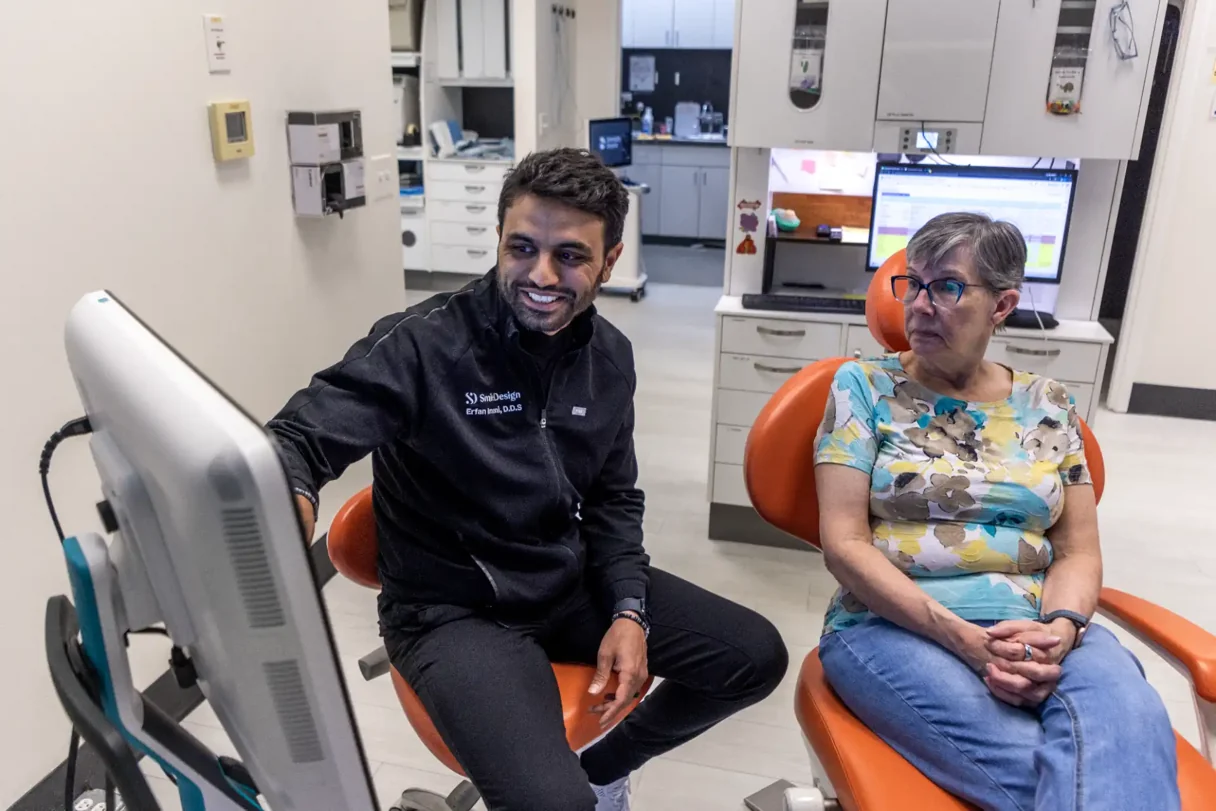
- Consultation and shade selection. Dr. Imeni assesses the tooth, confirms bonding is the right call, and matches the resin shade to your surrounding teeth in natural light.
- Surface preparation. The tooth is cleaned and lightly conditioned so the resin grips properly.
- Placing and sculpting. The composite is applied and shaped by hand to the contour of the tooth — this is the part that separates a repair you notice from one you do not.
- Curing. A high-intensity light hardens the resin in seconds.
- Finishing and polishing. Shape is fine-tuned, the bite is checked, and the surface is polished so it reflects light like natural enamel.
You eat and drink normally as soon as you leave — there is no healing period, because nothing was removed.
Questions Worth Asking Before You Book
- Is bonding the right treatment here, or am I better served by a veneer or a crown?
- Why did this tooth chip — is there an underlying cause to address first?
- Should I whiten before we match the shade?
- How many appointments, and how long will I be in the chair?
- What is the realistic lifespan for bonding on this particular tooth?
Frequently Asked Questions
What Is the Difference Between Bonding and Composite Bonding?
Nothing — they are the same treatment. "Composite" refers to the resin material used. Teeth bonding, tooth bonding and cosmetic bonding all describe the same procedure.
How Many Teeth Can Be Bonded in One Visit?
Several, depending on how much work each one needs. Small repairs on a few teeth are routinely done in one appointment; extensive reshaping across many teeth may be better split up, and may be a veneer case instead.
Can Bonding Close a Gap Between My Front Teeth?
Yes. Closing or narrowing a gap is one of the most common uses for bonding, and it avoids orthodontics entirely. Whether it suits your case depends on the size of the gap and your bite.
Can Bonded Teeth Be Whitened?
No. Whitening gel does not lighten composite resin, only natural enamel. Whiten first, then have the bonding shade-matched to your new color.
Is Dental Bonding Permanent?
No, and that is part of the appeal. Bonding lasts roughly three to ten years and can be repaired, replaced or removed. Because enamel is generally left intact, the tooth underneath keeps its options.
Does Bonding Damage the Natural Tooth?
Bonding typically does not require enamel removal, so the natural tooth stays intact beneath the resin.
How Soon Can I Eat After Dental Bonding?
Straight away. The resin is fully hardened by the curing light before you leave. Avoiding strongly staining food and drink for the first couple of days is a sensible precaution.
Book a Bonding Consultation in Durham
If a chip, gap or stain has been bothering you, the quickest way to find out what it takes to fix is to have someone look at it. Dr. Erfan Imeni holds a DDS from the UNC School of Dentistry and has extensive experience in cosmetic work, and will tell you plainly whether bonding is the right treatment for your tooth or whether something else carries the result better.
See how we approach it on our dental bonding page for Durham, NC, or get in touch to book. We are open Tuesday to Friday, 7:00am to 3:00pm, and we see patients from Durham, Brier Creek, Research Triangle Park, Chapel Hill and Raleigh.